Chest Pain, Shortness of Breath, or Angina? Here’s How We Evaluate Your Heart in Hot Springs
Chest pain or shortness of breath in Hot Springs, AR? Dr. Jeffrey Tauth explains how cardiac symptoms are evaluated and when to call a cardiologist.
Jeffrey G. Tauth, M.D., F.A.C.C.Board-Certified Interventional Cardiologist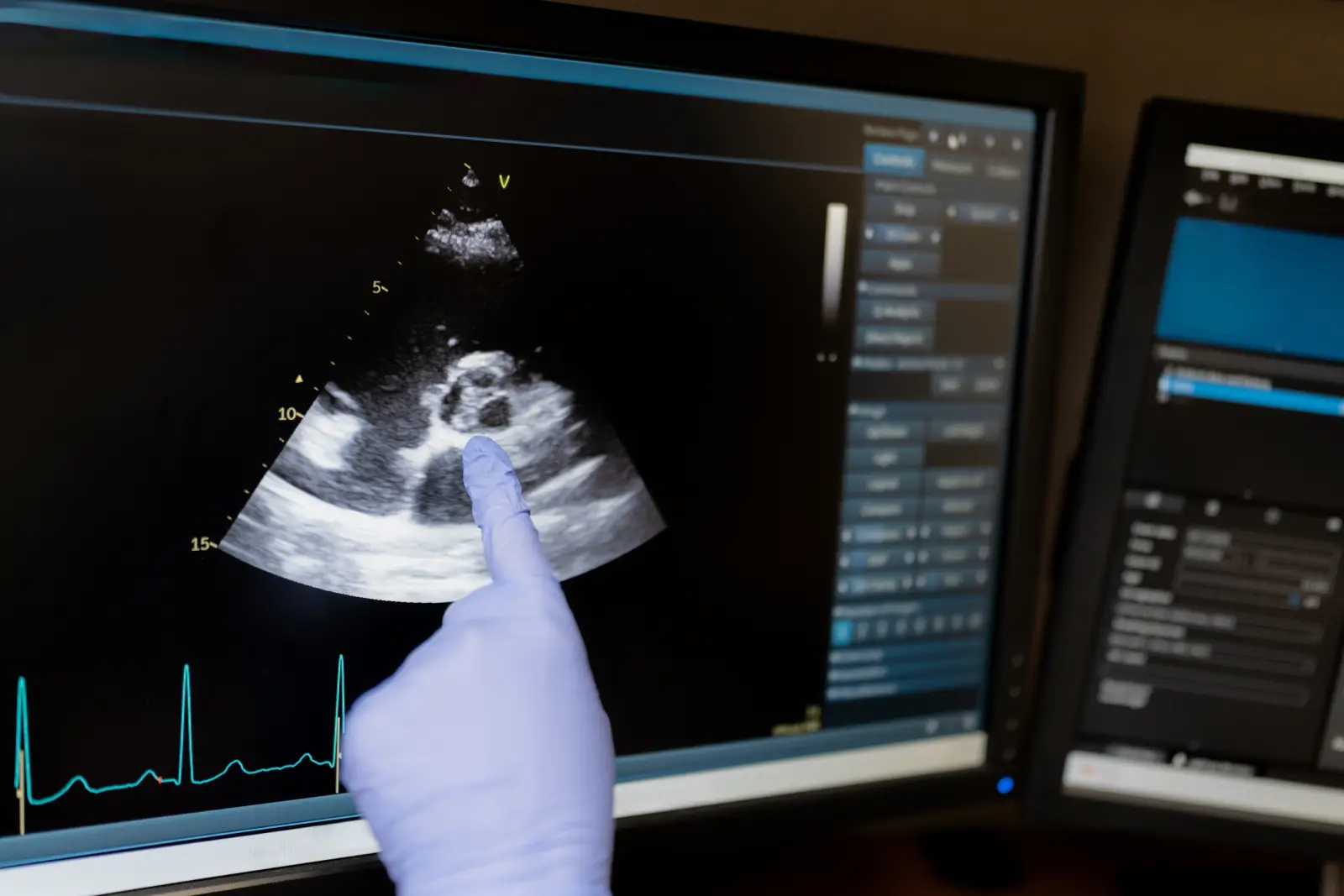
Chest pain and shortness of breath are two of the most common reasons patients seek cardiac evaluation, and two of the most commonly misinterpreted symptoms in primary care. Some patients wait months before anyone identifies a cardiac cause. Others are sent to the emergency room for symptoms that turn out to be non-cardiac. Both outcomes are costly: in time, in anxiety, and in delayed treatment.
At Hot Springs Heart and Vascular, Dr. Jeffrey Tauth is a board-certified interventional cardiologist who has been evaluating chest pain, shortness of breath, and angina in central Arkansas for more than 30 years. In this post, he walks through how a cardiac evaluation for these symptoms actually works, what tests are involved, and what patients can expect when they come in.
What Chest Pain and Shortness of Breath Actually Mean
Chest pain and shortness of breath are symptoms, not diagnoses. They have a wide range of possible causes, some cardiac and some not. The cardiologist’s job at your first evaluation is to determine whether the symptoms have a cardiac origin, and if so, how serious it is.
What Counts as Cardiac Chest Pain?
Not all chest pain feels like the dramatic clutching sensation most people picture. According to the 2021 AHA/ACC guidelines for chest pain evaluation, pain, pressure, tightness, or discomfort in the chest, shoulders, arms, neck, back, upper abdomen, or jaw (as well as shortness of breath and fatigue) should all be considered potential anginal equivalents. That is a much broader definition than most patients expect.
Cardiac chest pain, or angina, typically has several recognizable characteristics:
- It comes on with physical exertion or emotional stress and eases within minutes of rest
- It may feel like pressure, squeezing, heaviness, or tightness rather than sharp pain
- It may radiate to the jaw, left arm, shoulder, or upper back
- It tends to be reproducible: the same activity triggers it consistently
Angina that follows this pattern is called stable angina and reflects a coronary artery that is significantly narrowed but not completely blocked. It warrants evaluation but is not usually an emergency.
Unstable angina is different. It occurs at rest, wakes patients from sleep, or comes on with minimal exertion and does not follow a predictable pattern. This is a more urgent presentation and should be evaluated promptly. If chest pain is severe, sudden, and accompanied by sweating, nausea, or pain radiating to the arm or jaw, call 911. That is a potential cardiac emergency.
Aside from chest pain, discomfort in the jaw, arm, upper back, or abdomen can all be cardiac in origin.
What Causes Shortness of Breath?
Shortness of breath during exertion that has developed gradually, is getting worse over time, or appears during activities that previously caused no difficulty is a significant cardiac symptom. It can indicate that the heart is not pumping efficiently, that the coronary arteries are limiting blood flow to the heart during activity, or both.
Shortness of breath that worsens when lying flat and improves when sitting upright is a recognized sign of fluid accumulation in the lungs, which can occur in heart failure. Waking up at night struggling to breathe is a condition called paroxysmal nocturnal dyspnea (PND). It has non-cardiac causes including COPD, obesity, and sleep apnea, but it is also a recognized cardiac symptom that can indicate heart failure. It is worth bringing to a cardiologist for evaluation, as identifying a cardiac cause early matters for how it is managed.
How We Evaluate Chest Pain and Shortness of Breath at Hot Springs Heart and Vascular
The Initial History and Physical Exam
Every cardiac evaluation begins with a detailed history. Dr. Tauth will ask about the character of the chest discomfort, when it started, what brings it on, how long it lasts, and whether anything makes it better or worse. He will ask about associated symptoms: sweating, nausea, dizziness, palpitations, and leg swelling. He will review your cardiac risk factors, your family history, and your current medications.

The physical examination focuses on cardiovascular findings: heart sounds, heart rhythm, blood pressure in both arms, peripheral pulses, and signs of fluid retention. This examination often provides significant information before any testing begins.
Electrocardiogram
An electrocardiogram (ECG) is typically the first test performed. It records the heart’s electrical activity and can detect:
- Evidence of a prior heart attack
- Current ischemia (reduced blood flow to the heart muscle)
- Heart rhythm abnormalities
- Structural changes in the heart chambers
A normal ECG does not rule out coronary artery disease. Many patients with significant CAD have a completely normal resting ECG. It is a starting point, not a conclusion.
Stress Testing
A stress test evaluates how the heart responds to increased demand. During a standard exercise stress test, the patient walks on a treadmill at increasing speed and incline while the heart rate, blood pressure, and ECG are monitored continuously. The test identifies whether any areas of the heart develop reduced blood flow under the stress of exertion, which would not be apparent at rest.
For patients who cannot exercise adequately on a treadmill, a pharmacological stress test uses medication to simulate the effect of exercise on the heart.
Nuclear Cardiac Imaging
Nuclear cardiac imaging provides detailed pictures of blood flow through the heart muscle at rest and under stress. A small amount of a radioactive tracer is injected into the bloodstream, and a specialized camera images where that tracer goes within the heart muscle. Areas that receive less tracer at stress than at rest indicate reduced blood flow through the supplying coronary artery.
This test is particularly useful for identifying which specific coronary artery is affected, how large an area of heart muscle is involved, and how severe the reduction in blood flow is. It is one of the most informative non-invasive tools available for evaluating chest pain and shortness of breath with a suspected cardiac cause.
Echocardiogram
An echocardiogram uses ultrasound to create real-time images of the heart muscle and valves. It evaluates how well the heart is pumping, whether any areas of the heart wall are moving abnormally (which can indicate prior damage from a heart attack), and whether valve problems may be contributing to symptoms.
Shortness of breath in particular benefits from echocardiographic evaluation, because heart failure and significant valve disease are both well-identified on echo and both commonly present with exertional breathlessness.
All of This Happens in One Location
At Hot Springs Heart and Vascular, all of these tests are performed in-clinic. Patients are not sent to an imaging center for their stress test or echocardiogram. They do not wait days for results to come back from an outside facility. Dr. Tauth orders the testing, the testing happens at the practice, and Dr. Tauth reviews the results directly.
For patients who have been living with chest pain or unexplained shortness of breath and have been bounced between providers without a clear answer, that streamlined approach often means a diagnosis in a single visit rather than over several weeks.
When Cardiac Catheterization Is the Next Step
Non-invasive testing narrows down the likely cause of symptoms and estimates the severity. When results suggest significant coronary artery disease, or when symptoms are strong enough that a definitive answer is needed, a cardiac catheterization provides the clearest picture.
A catheter is guided through the arteries to the heart, contrast dye is injected, and the coronary arteries are imaged directly under X-ray fluoroscopy. This shows exactly which arteries are blocked, where the blockages are, and how severe they are. If a blockage is found that warrants immediate treatment, a stent can be placed during the same procedure.
Cardiac catheterization and any resulting intervention are performed at the Vascular Center of Hot Springs, the ambulatory surgical center Dr. Tauth opened in April 2026 as the first cardiovascular ASC in central Arkansas.
Getting Evaluated in Hot Springs
Patients in Hot Springs and central Arkansas who have been experiencing chest pain, shortness of breath, or symptoms that suggest angina do not need to wait for a referral to get seen. Hot Springs Heart and Vascular accepts new patients directly, and the same-day appointment availability means patients with active symptoms are not waiting days for an opening.
Schedule an Appointment With Dr. Tauth
If you are experiencing chest pain, shortness of breath, or other symptoms that may indicate a cardiac problem, Dr. Jeffrey Tauth welcomes new patients at Hot Springs Heart and Vascular in Hot Springs, Arkansas. Just give us a call at (501) 767-4278 to speak with one of our staff.
Written by
Jeffrey G. Tauth, M.D., F.A.C.C. · Board-Certified Interventional Cardiologist
Interventional cardiologist with more than 30 years in cardiac and vascular care, practicing in Hot Springs and Mena, Arkansas.